
Materia Culinaria
A Journal of Ingredients from Elements Cookery School
To Know Our Food More Intimately
Materia Culinaria begins with a belief that to know our food intimately is to know something about the world—and ourselves—more intimately.
We live in a time of extraordinary access to information about food and, somehow, increasing estrangement from it. We can tell you how many grams of protein are in our breakfast, whether a food will spike our blood sugar, which oil we should cook with and which ingredient has recently been crowned a superfood.
We have become fluent in calories, macros, supplements and restrictions while becoming increasingly removed from the plants, animals, people, places and processes from which our food comes.
Materia Culinaria is an invitation in the opposite direction: toward attention.
The Method
Each edition begins with one ingredient and explores it through story, sensory observation, culinary technique, Ayurveda and transformation.
We ask where it came from. How it grows. What it smells like when cut. What heat does to it. What people have done with it across time and place. How Ayurveda understands its qualities. What happens when we roast it, grind it, ferment it, steep it, preserve it or simply taste it as it is.
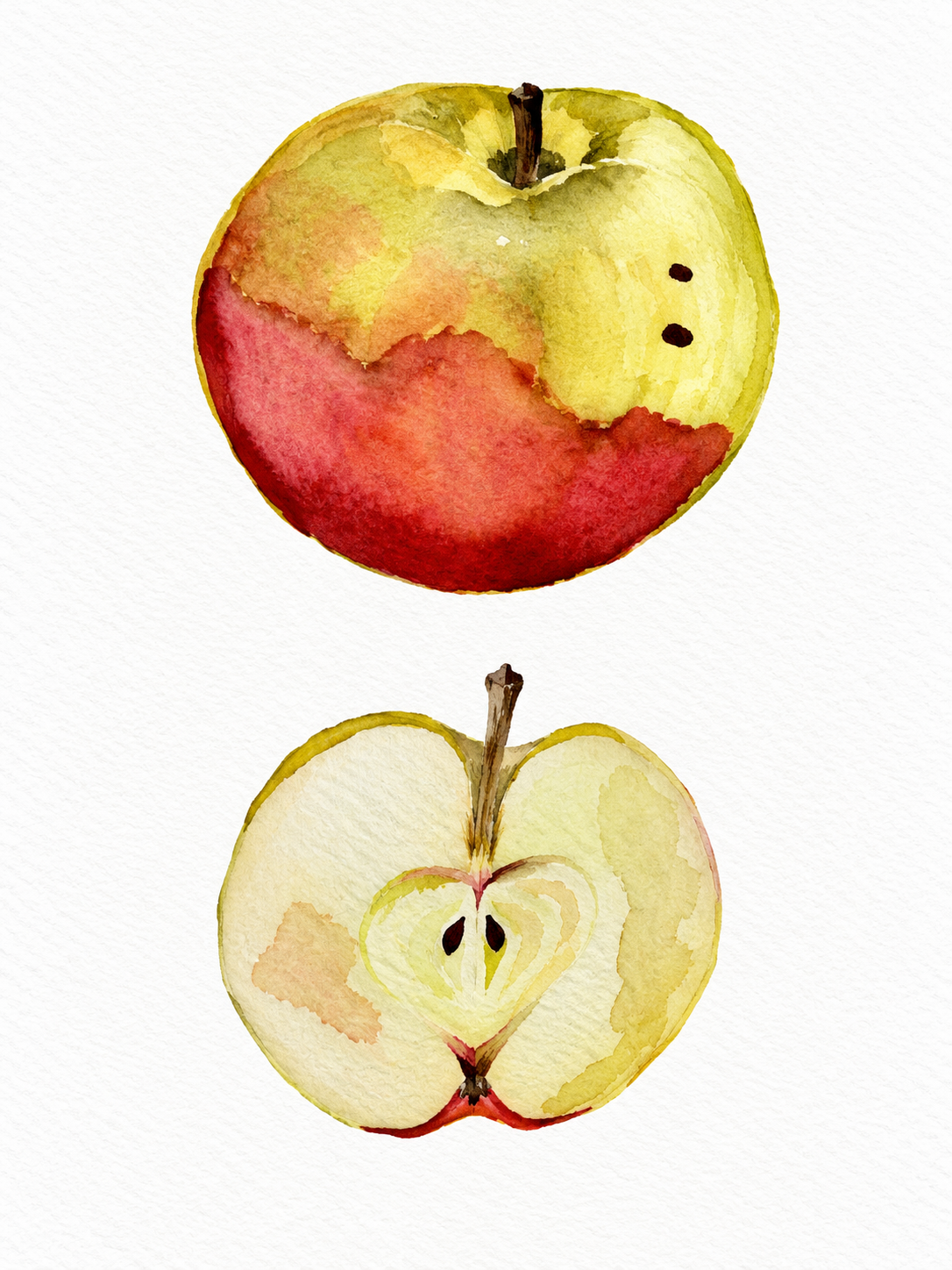
Original ingredient paintings and illustrations form an ever-evolving visual archive alongside the writing.
A Letter From Materia Culinaria
Materia Culinaria is a love letter to ingredients.
It was born from a belief that to know our food intimately is to know something about the world and ourselves more intimately and it is the backbone of the methodology at Elements Cookery School.
We live in a time of extraordinary access to information about food and, somehow, increasing estrangement from it. We can tell you how many grams of protein are in our breakfast, whether a food will spike our blood sugar, which oil we should cook with and which ingredient has recently been crowned a superfood. We have become fluent in calories, macros, supplements and restrictions while becoming increasingly removed from the plants, animals, people, places and processes from which our food comes.
Our culinary culture can create a different kind of distance. An ingredient becomes a commodity to source, a flavor to manipulate, a vehicle for technique, an object to be fetishized. We learn what to do with it without necessarily asking what it is.
I believe something essential is lost in that distance.
Food is one of the most intimate ways we participate in the natural world. We take something that grew from soil, drank rain, absorbed sunlight, flowered, fruited, fermented or fed, and we bring it into the body. Eventually, the boundary between it and us disappears. Food becomes blood, tissue, energy, memory.
It becomes us.
To cook, then, is not simply to prepare something to eat. It is to enter into a relationship with the material world.
This is the territory of Materia Culinaria.
Each edition begins with a single ingredient and follows it wherever it leads me: into the field and the kitchen, certainly, but also into botany, history, mythology, medicine, agriculture, art, culture and my own personal memories. We will ask where an ingredient comes from, how it grows, how people have understood it, desired it, preserved it, passed down stories about it, transformed it, and what it can teach us when we pay close enough attention.
Ayurveda will be one of our guides because it offers a language for this kind of intimacy. It asks us to experience food not simply as a collection of nutrients but through its qualities: its taste, temperature, weight, moisture, seasonality, preparation and effects on a particular body at a particular moment.
Because I don't believe the crisis in our relationship with food will be solved by giving people another list of things they should and shouldn't eat.
I think we need to fall in love with food again.
Not food as indulgence, exploitation or entertainment, but food as something worthy of our intimate attention.
To know the smell of an apple beginning to ferment beneath a tree. To hear the moment the skin of a spatchcocked chicken is perfectly crisp. To understand why a lentil behaves differently when soaked. To recognize the season when a tomato actually tastes like a tomato and why. To know the hands and landscapes behind what we eat. To become curious enough about an ingredient that it ceases to be an anonymous object and becomes part of a larger living world.
That intimacy changes the way we cook. It changes the way we eat. It changes what we waste, what we value, what we grow and what we choose to preserve.
And I believe it reaches farther than the kitchen.
Attention is a practice. When we learn to look closely at something as ordinary as what is on our plate, we practice looking closely at the world. We begin to notice season, place, interdependence, transformation and consequence. We remember that nourishment is not something manufactured for us but a relationship in which we participate.
Materia Culinaria is an invitation into that relationship, one ingredient at a time.